Corrective exercise, Scottsdale
Corrective exercise in Scottsdale. Train hard without paying for it the next day.
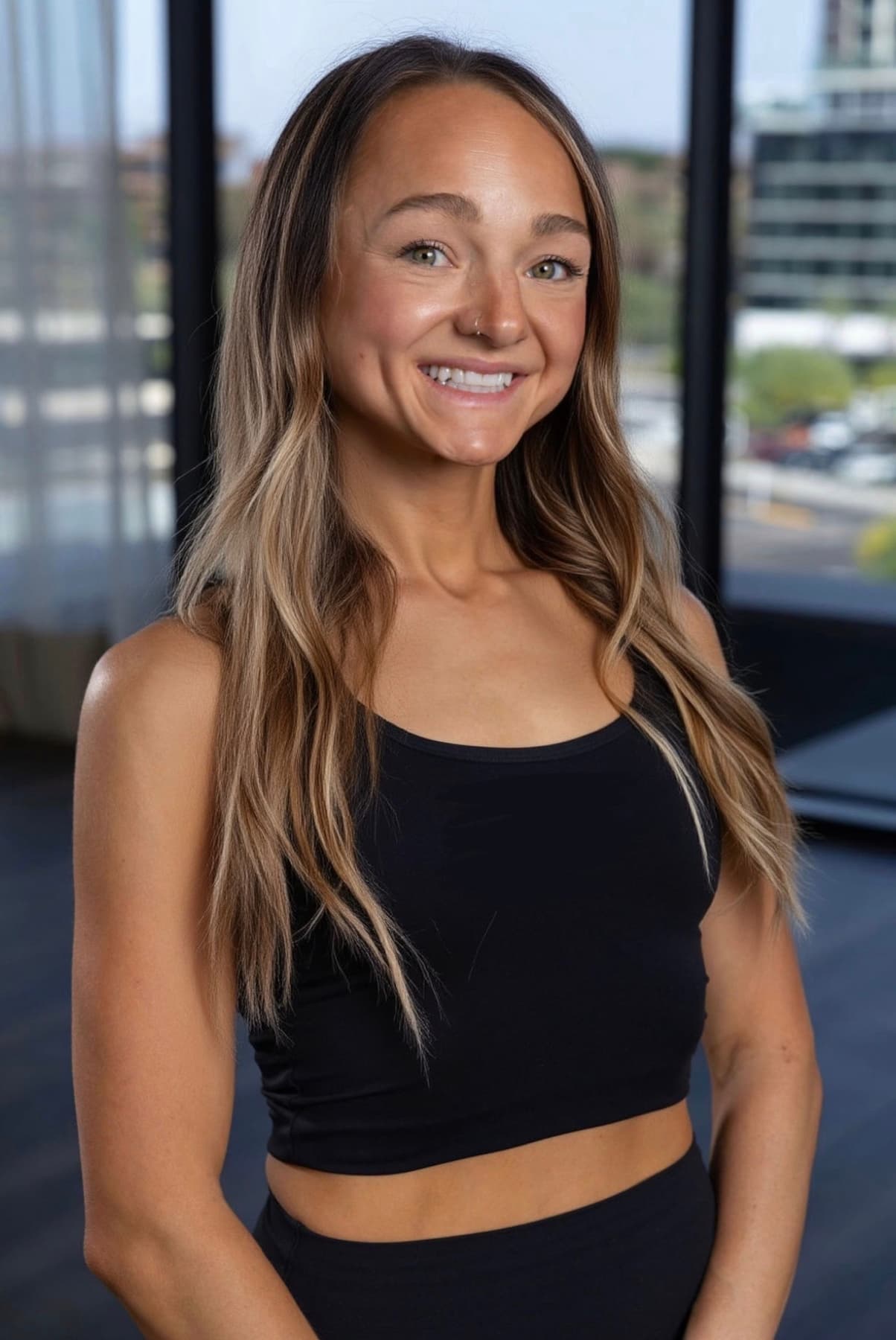
Steph spent more than four years as a physical therapy tech and aide in Scottsdale clinics. Now she uses what she learned there to help women fix how they move, then get properly strong.
20 minutes. No pitch. You leave with one clear next step.
- B.S.Exercise ScienceGrand Canyon University. The why behind every rep, not just the what.
- 4+ yrsIn physical therapy clinicsScottsdale rehab and HonorHealth. She has seen what bad movement costs people.
- IINBoard Certified Health CoachInstitute for Integrative Nutrition. Food and habits, not just workouts.
- CPTCorrective exercise specialistStrength, conditioning and nutrition certified. Trains members at a luxury Scottsdale hotel.
What corrective exercise means
The program starts from how you move, not from a template. The sore spot is often not the source. Stiff ankles load the knees, a tight upper back loads the shoulders, and a core that does not brace sends the work to the low back. Corrective exercise finds that link and trains it.
The assessment comes first
Before you lift anything, Steph watches you breathe, squat, hinge, push, pull, carry and balance on one leg. She checks your hips, ankles, shoulders and upper back. Then she writes the program around what she finds.
Then you get strong
Corrective work is not the whole program. It is woven into real strength training, so the fixes hold up under load. The goal is a body you trust on a trail, on a court or on the floor with your kids.
Where coaching ends and medical care begins
Steph is a trainer, not a physical therapist or a doctor. If you are under a doctor’s or physical therapist’s care, she works with that plan instead of overriding it. If something needs a medical look, she will tell you.
Who it’s for
This is for you if
- A knee, shoulder or low back flares every time you push.
- You finished physical therapy and want to keep building.
- You sit most of the day and feel it in your neck, hips or back.
- You want to lift heavier without guessing whether it is safe.
Questions
Good questions to ask first.
Is corrective exercise the same as physical therapy?
No. Physical therapy diagnoses and treats injuries. Corrective exercise is training: it improves how you move so you can build strength safely. It is a good next step after you finish physical therapy.
Can I train with an old injury?
Usually, yes. That is the heart of what Steph does. The program is built around what you can do today, and if you are under a doctor’s care she works with that plan.
Is it just stretching and bands?
No. You will do mobility and stability work, and you will also lift real weights. The corrective work is what makes the heavier lifting possible.

Free consult call
Twenty minutes. No pitch. One clear next step.
Tell Steph where you are. She will tell you honestly what she would do, and whether she is the right coach for it. Either way you leave knowing what to do next.
- 01You fill in the short form.
- 02Steph replies within one business day with times.
- 03You talk, and decide with everything in front of you.